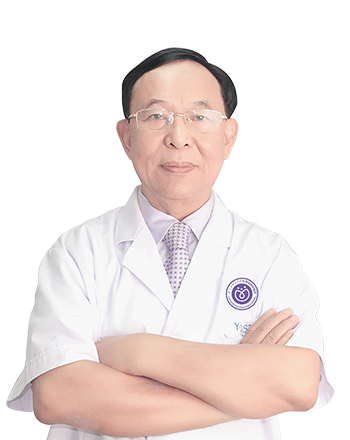
Professor Luo Pengfei is a renowned expert in interventional oncology and the founder of the "Luo Pengfei Programmed Tumor Diagnosis and Treatment Method" (holder of the Benelux International Patent, Patent No.: LU501835). He currently serves as Deputy Director of Guangdong Provincial Cancer Center, Director of the Imaging and Interventional Center of Guangdong Provincial People's Hospital, Lifetime Professor of Guangdong Provincial People's Hospital, and Master's Supervisor. He also holds positions including Adjunct Professor of Sun Yat-sen University, Recipient of the Special Government Allowance for Experts with Outstanding Contributions from the State Council, Member of the Consultation Expert Group of the Central Health Care Office, Vice Chairman of the Interventional Radiology Society of the Chinese Medical Association, Vice Chairman of the Interventional Diagnosis and Treatment Professional Committee of the Chinese Anti-Cancer Association, Chairman of the Guangdong Interventional Medicine Group, Editorial Board Member of Chinese Journal of Radiology, and Honorary Chairman of the Oncology Branch of Baiyun District Medical Association.
He studied in Japan for one year and has received numerous national and provincial-level research projects and achievements. He has served as chief editor or associate editor of 5 medical monographs and published more than 40 papers in important domestic and international journals.
- Graduated with a Bachelor's degree from the Medical Department of Sun Yat-sen University in Guangzhou in 1970.
- Graduated with a Master's degree in Radiology from Kunming Medical University in 1982, focusing on radiology and oncology, with a professional specialization in Interventional Therapy of Cancer (ITC).
In addition to his own diligent learning, he actively participates in academic exchanges with peers from the United States, Europe, Japan, and other countries. From 1987 to 1988, he studied interventional therapy (ITC) as a visiting scholar at the School of Medicine, Kobe University, Japan for one year. He has participated in the Radiological Society of North America (RSNA) Annual Meeting held in Chicago, USA five times (RSNA is a transnational medical organization with over 48,000 members and a high-profile medical conference). During this period, he has attended the Cardiovascular and Interventional Radiological Society of Asia and Oceania (CVIR) Annual Meetings held in Europe, Japan, and South Korea multiple times, and delivered a speech and presented a paper on interventional treatment of liver cancer at the 1995 Seoul Conference in South Korea. He once served as the first Chairman of the Guangdong Interventional Radiology Society, and has been elected Vice Chairman of the National Interventional Radiology Society of the Chinese Medical Association since 2001, Director of the Chinese Anti-Cancer Association and Vice Chairman of the Interventional Diagnosis and Treatment Committee, and Director of the Chinese Society of Medical Imaging Technology. He was awarded the Outstanding Contribution Award by the 9th Chinese Interventional Radiology Society in September 2010, and the Lifetime Achievement Award in Chinese Interventional Radiology at the 14th Chinese Interventional Radiology Annual Conference in 2017.
With over 40 years of clinical experience in the diagnosis and treatment of solid tumors such as liver cancer, lung cancer, pancreatic cancer, cholangiocellular carcinoma, head and neck cancer, bone metastases, and colorectal cancer with liver metastases. He is the founder of the "Luo Pengfei Programmed Tumor Diagnosis and Treatment Method", which is protected by an international patent. Based on the assertion that the biological activity of tumors can be inactivated, he adopts a three-step anti-cancer approach (tumor control, tumor shrinkage, and tumor inactivation) in clinical practice to perform programmed minimally invasive treatment of malignant tumors targeting the inactivation of tumor biological activity.
Interventional Radiology refers to radiologists directly participating in clinical treatment under image guidance. In 1964, American radiologist Charles Dotter successfully cured lower extremity arterial stenosis in an 82-year-old female using coaxial catheter dilation, which is recognized as the starting point of interventional radiology. After 1979, Professors Lin Gui and Liu Zijiang from China introduced this technology and actively applied it to the treatment of liver cancer. At that time, he studied interventional radiology technology under the two professors.
① In 1985, he performed the first embolization treatment of varicocele in China using an improved Cobra catheter, and summarized the X-ray anatomical classification of varicocele and corresponding embolization techniques in detail. Relevant papers have been published in professional journals, newspapers, and conferences, and have been accepted by the industry. Currently, the surgical ligation method for varicocele has been replaced by the simple, efficient, and painless catheter method.
② Since the 1980s, he has conducted research on more than 20,000 patients with advanced liver cancer for over 20 years, doing a lot of work in intubation technology, embolization technology, and complication management, and solving all or part of the key problems. The basic program for liver cancer treatment that he participates in formulating, namely Transcatheter Arterial Chemoembolization (TACE) + Ablation + targeted drugs, has become a consensus in the industry.
③ Three professional works edited by him, including Interventional Diagnosis and Treatment of Tumors and Clinical Interventional Therapy, and one co-edited work Clinical Interventional Therapy, have long been regarded as one of the authoritative guidelines for doctors in this field in China. He has published 37 professional papers as the first author in core journals, which have been cited 325 times; and 95 papers as a non-first author, which have been cited 1,215 times.
④ Over the years, he has trained more than 200 doctoral and master's students and advanced students, most of whom have become leaders in interventional radiology in various provinces, cities, and even the whole country, and have appeared on authoritative platforms such as RSNA many times.
In recognition of his outstanding contributions to the establishment and development of interventional radiology:
- He was commended by the State Council and the Ministry of Health in 1992 and awarded the Special Government Allowance for Outstanding Contributions.
- He received the Certificate of Outstanding Contributions to Medicine in the 20th Century issued by the International Biographical Centre of Cambridge, UK in 1999.
- He won the Outstanding Contribution Award from the Radiological Society of the Chinese Medical Association twice in 2005 and 2010.
- He was awarded the Outstanding Contribution Award by the Guangdong Academy of Medical Sciences in 2017.
- He won two Outstanding Contribution Awards in 2018, one from the National Pediatric Interventional Conference and the other from the Guangdong Medical Association.
- The "Luo Pengfei Programmed Tumor Diagnosis and Treatment Method" obtained the Benelux International Patent in October 2022 (Patent No.: LU501835).
He serves as a reviewer and editor for many core professional journals, a reviewer for national scientific and technological projects, a reviewer for national new drugs, a reviewer for senior professional titles in Guangdong Province, a member of the Guangdong Medical Malpractice Appraisal Committee, and a senior health care consultation expert at the national, provincial, and municipal levels.

 doctor