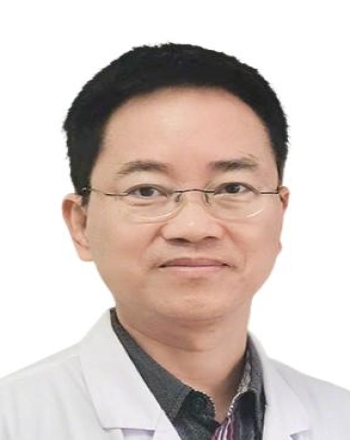
Chief Physician in Interventional Radiology for Oncology, inheritor of Programmed Micro‑needle Technique, and leader of the research team for Luo Pengfei Programmed Oncology Diagnosis and Treatment (Benelux International Patent, Patent No.: LU501835).
Dr. Wang graduated from the 6‑year program of the Medical Department, Jinan University School of Medicine in 1988, and completed postgraduate training at Southern Medical University in 2008. He has worked in the Oncology Department of Shunde People’s Hospital Affiliated to Southern Medical University (Grade A Tertiary Hospital) for nearly 30 years.
For 29 years, he studied under Professor Luo Pengfei, a leading pioneer in interventional radiology in China, and has mastered Programmed Micro‑needle Technique with solid theoretical foundation and superb skills. With more than 30 years of interventional practice, he has performed over 10,000 interventional procedures as the chief surgeon.
He has received Science and Technology Progress Awards from Foshan Municipal Government and Shunde District Government. He has published more than 10 academic papers in national medical journals with wide recognition. Currently, he serves as Chairman and Chief Surgeon of the Luo Pengfei‑Wang Jian Interventional Research Team, focusing on standardized methods and clinical practice of biologically targeted programmed inactivation of tumors.
Co‑inventor of Luo Pengfei Programmed Oncology Diagnosis and Treatment (protected by international patent). Based on the principle that tumor biological activity can be inactivated, he applies a three‑step anti‑tumor strategy: tumor control, tumor shrinkage, and tumor inactivation, using programmed minimally invasive techniques for the treatment of malignant tumors.
He comprehensively applies various minimally invasive techniques including superselective arterial chemoembolization, radioactive seed implantation, physical ablation, and vascular, esophageal and biliary stent implantation for neoplastic and non‑neoplastic diseases:
- Arterial infusion and embolization for solid tumors including liver cancer, lung cancer, renal cancer, bladder cancer, gynecological and head & neck tumors.
- Local ablation for malignant tumors: microwave, radiofrequency, and argon‑helium cryoablation.
- ¹²⁵I radioactive seed implantation for malignant tumors.
- Vertebroplasty for vertebral compression fractures.
- Embolization for uterine fibroids and hepatic hemangiomas.
- Metallic stent placement for vascular, esophageal and biliary strictures caused by tumor compression.
- Emergency embolization for massive hemoptysis, traumatic liver/kidney rupture, gastrointestinal bleeding, postpartum hemorrhage and other acute bleeding.
- Chemotherapy, targeted therapy and immunotherapy for solid tumors.
- Transjugular intrahepatic portosystemic shunt (TIPS) for liver cirrhosis, catheter drainage for intestinal obstruction, etc.

 doctor