
Global Medical Services
International Medical Center
 Diseases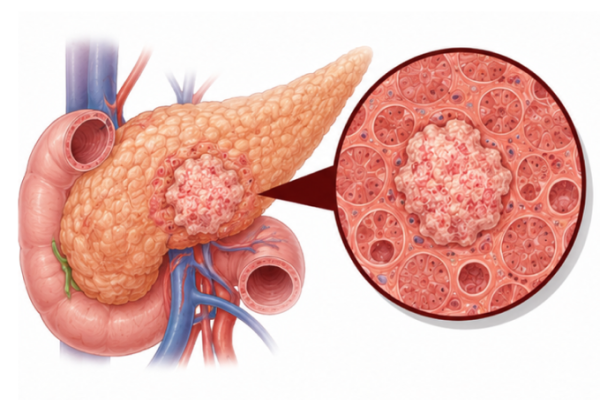
Pancreatic cancer is one of the most aggressive malignancies with the worst prognosis. Learn about its causes, symptoms, treatment and prognosis at Guangzhou Fosun Chancheng Hospital.
Pancreatic cancer originates from the ductal epithelium or acinar cells of the pancreas and is known as the king of cancers due to its extremely poor prognosis. There are about 500,000 new cases worldwide each year, with China accounting for about half. It is insidious in onset and progresses rapidly; the early diagnosis rate is only about 20%, and most patients already have locally advanced or metastatic disease at diagnosis. The overall 5-year survival rate is only about 10%. Cancer of the pancreatic head is the most common type, accounting for 70-80% of cases.
Smoking: The most clearly established risk factor, increasing risk 2-3 fold. About 25% of pancreatic cancers are attributed to smoking.
Chronic Pancreatitis: Patients with chronic pancreatitis have a 10-20 fold higher risk, especially those with hereditary pancreatitis.
Diabetes: Long-standing type 2 diabetes is an independent risk factor; new-onset diabetes may also be an early manifestation of pancreatic cancer.
Genetic Factors: About 10% of pancreatic cancers show familial clustering. Mutations in BRCA1/2, PALB2, ATM, CDKN2A and other genes increase risk.
Diet and Obesity: High-fat diets, excessive processed meat intake, and obesity (BMI above 30) are associated with increased risk.
Age and Gender: Peak incidence occurs at age 60-80, and men are slightly more affected than women.
Other Factors: Long-term exposure to certain chemicals (benzene, pesticides) and H. pylori infection.
Jaundice: Obstruction of the common bile duct by pancreatic head tumors causes jaundice with yellowing of skin and sclera, dark urine and clay-colored stools.
Upper Abdominal Pain: Persistent dull or aching pain that often radiates to the back, worsens at night, and is slightly relieved by bending forward.
Weight Loss and Wasting: Significant weight loss over a short period with loss of appetite is a common early feature.
Fatigue and Anemia: Tumor-related wasting, malnutrition and anemia.
New-Onset Diabetes: Sudden onset of elevated blood glucose after age 50 without a family history of diabetes warrants attention.
Dyspepsia: Bloating, nausea and steatorrhea due to impaired exocrine pancreatic function.
Thrombosis: Migratory thrombophlebitis (Trousseau sign) is a characteristic manifestation.
Surgery: Curative resection is the only potentially curative treatment. Pancreaticoduodenectomy (Whipple procedure) for head tumors and distal pancreatectomy for body/tail tumors. Only about 15-20% of patients are resectable at diagnosis.
Neoadjuvant Therapy: Preoperative chemotherapy (FOLFIRINOX or gemcitabine-based regimens) with or without radiation is increasingly used for borderline resectable tumors to improve R0 resection rates.
Adjuvant Chemotherapy: Postoperative chemotherapy for 6 months is standard after resection to reduce recurrence.
Systemic Therapy for Advanced Disease: FOLFIRINOX, gemcitabine plus nab-paclitaxel, or gemcitabine alone are the main regimens. Maintenance therapy with PARP inhibitors (olaparib) for BRCA-mutated disease.
Targeted and Immunotherapy: PD-1 inhibitors for MSI-H/dMMR tumors, NTRK inhibitors for NTRK fusion-positive tumors.
Radiotherapy: Stereotactic body radiation therapy (SBRT) and chemoradiation are used for locally advanced unresectable disease and palliation.
Palliative Care: Biliary stenting, pain management, enzyme replacement for malabsorption, and nutritional support play an essential role.
Overall Survival: The overall 5-year survival rate is only about 10%. For resected early-stage disease, 5-year survival is 20-40%, while metastatic disease carries a median survival of less than 12 months.
Favorable Factors: Early stage, resectable tumor, well-differentiated histology, negative margins (R0), and absence of lymph node involvement are favorable.
Unfavorable Factors: Locally advanced or metastatic disease, vascular invasion, poor differentiation, elevated CA19-9, and weight loss indicate worse outcomes.
Recurrence: Recurrence rates are high even after curative resection, with most recurrences occurring within 2 years, underscoring the importance of close surveillance.
Advances: Newer systemic regimens and molecularly targeted approaches are gradually improving outcomes.
Screening: High-risk groups (hereditary pancreatitis, family history, BRCA mutation carriers, new-onset diabetes after 50) should undergo annual screening with MRI/MRCP or EUS.
Lifestyle: Quit smoking, limit alcohol, maintain a healthy weight, and reduce intake of high-fat and processed foods.
Manage Diabetes: Regular blood glucose monitoring and proper management of new-onset diabetes.
Genetic Testing: Germline genetic testing is recommended for all pancreatic cancer patients and high-risk family members.
Post-Treatment Follow-Up: CA19-9 monitoring and imaging every 3-6 months after treatment; symptom monitoring for jaundice recurrence, pain and weight changes.
Nutrition: Pancreatic enzyme replacement and nutritional support for malabsorption and weight maintenance.
Concerned about Pancreatic Cancer? Submit your medical records for a professional evaluation.
Upload Documents View Patient CasesPrepare pathology reports, imaging scans, genetic testing reports and prior treatment records for faster review.