
Global Medical Services
International Medical Center
 Diseases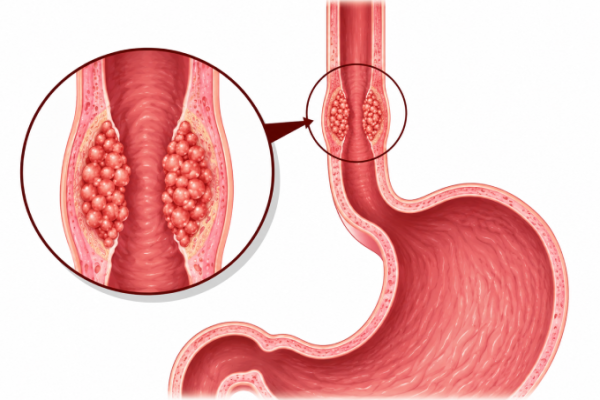
Esophageal cancer is the eighth most common cancer worldwide and highly prevalent in China. Learn about its causes, symptoms, treatment and prognosis at Guangzhou Fosun Chancheng Hospital.
Esophageal cancer originates from the mucosal epithelium of the esophagus and is the eighth most common malignancy worldwide, with more than 600,000 new cases each year. China is a high-incidence region, accounting for about 50% of new cases worldwide, especially in the Taihang Mountain area bordering Henan, Hebei and Shanxi provinces. The two main pathological types are squamous cell carcinoma and adenocarcinoma; squamous cell carcinoma predominates in China (about 90%). Early symptoms are subtle, and most patients are diagnosed at an advanced stage with a 5-year survival rate of only 15-25%.
Smoking and Alcohol: Both are important risk factors for esophageal squamous cell carcinoma, with a synergistic carcinogenic effect when combined.
Dietary Habits: Very hot food and beverages (temperatures above 65 degrees Celsius have been classified as probably carcinogenic by WHO), pickled foods (containing nitrosamines), moldy foods, and coarse food that damages the esophageal mucosa.
Nutritional Deficiencies: Lack of fresh vegetables and fruits, and deficiencies of vitamins (A, B2, C, E) and trace elements (selenium, zinc, molybdenum).
Esophageal Diseases: Barrett esophagus is a precancerous lesion for adenocarcinoma; achalasia and corrosive strictures also increase risk.
Gastroesophageal Reflux Disease (GERD): Long-term reflux damages the lower esophageal mucosa and increases the risk of adenocarcinoma.
Genetic Factors: Esophageal cancer shows familial clustering, and carriers of mutations such as TP53 have increased risk.
HPV Infection: Some studies suggest an association between HPV and esophageal squamous cell carcinoma.
Progressive Dysphagia: The most typical and common symptom, gradually worsening from difficulty with solid foods to liquids.
Odynophagia: Retrosternal burning, stinging or pulling sensation that worsens when swallowing.
Food Regurgitation: Spitting of mucus-like saliva related to esophageal obstruction.
Weight Loss: Malnutrition and wasting caused by dysphagia and tumor consumption.
Hoarseness: Vocal cord paralysis when the tumor invades the recurrent laryngeal nerve.
Cough and Aspiration: Caused by tumor compressing the trachea or the formation of a tracheoesophageal fistula.
Upper Gastrointestinal Bleeding: Hematemesis or black stools indicating tumor ulceration and bleeding.
Surgery: Esophagectomy with lymph node dissection is the main curative treatment for resectable tumors. Minimally invasive approaches reduce complications and speed recovery.
Endoscopic Resection: Early superficial cancers confined to the mucosa can be removed by endoscopic mucosal resection (EMR) or endoscopic submucosal dissection (ESD).
Neoadjuvant Therapy: Preoperative chemoradiotherapy significantly improves survival for locally advanced resectable disease, increasing R0 resection rates.
Definitive Chemoradiotherapy: The standard alternative for patients unfit for surgery, especially for cervical and upper thoracic tumors, achieving outcomes comparable to surgery in selected patients.
Adjuvant Therapy: Postoperative chemotherapy or chemoradiotherapy for high-risk patients with lymph node involvement.
Targeted and Immunotherapy: PD-1/PD-L1 inhibitors (nivolumab, pembrolizumab) combined with chemotherapy for advanced disease; HER2-targeted therapy for HER2-positive adenocarcinoma.
Palliative Care: Stent placement for dysphagia relief, nutritional support (feeding tube or gastrostomy), and pain management.
Overall Survival: Early-stage esophageal cancer can be cured endoscopically with a 5-year survival of over 80%. Locally advanced disease treated with neoadjuvant therapy plus surgery has a 5-year survival of 30-50%, while the overall 5-year survival remains 15-25% because most patients present at an advanced stage.
Favorable Factors: Early stage, complete (R0) resection, well-differentiated histology and absence of lymph node metastasis are favorable.
Unfavorable Factors: Deep tumor invasion, lymph node metastasis, distant metastasis, and poor nutritional status indicate worse outcomes.
Recurrence: Locoregional recurrence is common within the first 2 years after treatment, so regular surveillance with endoscopy and imaging is essential.
Histology: In China, squamous cell carcinoma is more common and is often treated with chemoradiotherapy-based approaches.
Screening: Endoscopic screening is recommended every 1-2 years for people over 45 in high-incidence regions and for those with a family history of esophageal cancer.
Diet: Avoid very hot food and beverages, pickled and moldy foods; increase intake of fresh vegetables, fruits, and foods rich in selenium, zinc and vitamins.
Lifestyle: Quit smoking, limit alcohol, and treat gastroesophageal reflux disease and Barrett esophagus regularly.
High-Risk Management: Patients with Barrett esophagus or achalasia require regular endoscopic surveillance.
Post-Treatment Follow-Up: Regular endoscopy, imaging and nutritional monitoring after treatment; careful attention to swallowing function and body weight.
Nutrition: For patients with dysphagia, use semi-liquid or liquid diets and consider nutritional support to prevent weight loss.
Concerned about Esophageal Cancer? Submit your medical records for a professional evaluation.
Upload Documents View Patient CasesPrepare pathology reports, imaging scans, genetic testing reports and prior treatment records for faster review.