
Global Medical Services
International Medical Center
 Diseases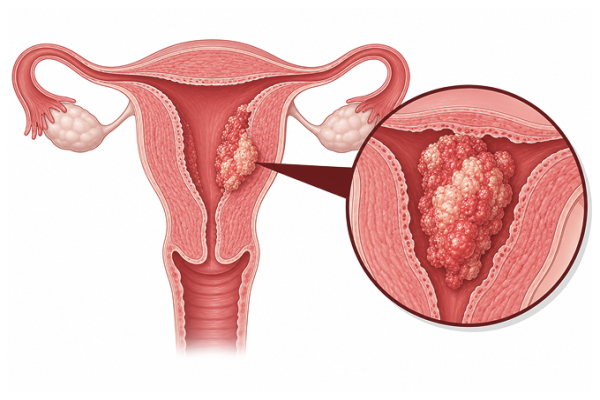
Endometrial cancer is the most common gynecologic malignancy in developed countries, usually presenting with abnormal vaginal bleeding. Learn about its causes, symptoms, treatment and prognosis at Gua
Endometrial cancer originates from the glands of the endometrium and is also called uterine corpus cancer. It is the most common gynecologic malignancy in developed countries, with about 420,000 new cases each year worldwide and a rising incidence. In China the incidence is increasing. It mainly affects postmenopausal women with a peak age of 50-60. Because most patients present early with abnormal vaginal bleeding, about 70% are diagnosed at stage I, and the overall prognosis is good with a 5-year survival rate above 80%.
Increased Estrogen Exposure: Elevated endogenous or exogenous estrogen without progesterone antagonism is the most important risk factor.
Obesity: Women with BMI above 30 have a 2-4 fold increased risk; adipose tissue converts androgens to estrogen.
Diabetes: Type 2 diabetes increases the risk of endometrial cancer about 2 fold.
Hypertension: Hypertension is an independent risk factor.
Menstrual and Reproductive Factors: Early menarche (before 12), late menopause (after 55), nulliparity and polycystic ovary syndrome (PCOS).
Genetic Factors: Lynch syndrome (HNPCC) is the most important hereditary factor, with a lifetime risk of endometrial cancer of 40-60% in carriers.
Hormone Replacement Therapy: Estrogen-only replacement without progestogen increases risk 2-10 fold.
Tamoxifen: Long-term use in breast cancer patients increases the risk of endometrial cancer.
Abnormal Vaginal Bleeding: Postmenopausal bleeding is the most common symptom, accounting for about 90% of presentations. Irregular perimenopausal bleeding also warrants attention.
Abnormal Vaginal Discharge: Increased serous or bloody leukorrhea, becoming purulent and foul-smelling when infected.
Lower Abdominal Pain: Caused by tumor invading the cervical canal with pyometra, or invasion of parametrial tissues in advanced disease.
Pelvic Mass: Enlarged uterus or a pelvic mass may be felt on gynecologic examination.
Advanced Symptoms: Weight loss, anemia, fatigue and leg swelling due to tumor consumption and compression.
Surgery: Total hysterectomy with bilateral salpingo-oophorectomy and lymph node evaluation is the cornerstone of treatment for early-stage disease. Minimally invasive (laparoscopic or robotic) approaches are preferred.
Adjuvant Radiotherapy: Vaginal brachytherapy or pelvic external beam radiation for high-risk or node-positive patients reduces locoregional recurrence.
Chemotherapy: Platinum-based chemotherapy (carboplatin plus paclitaxel) is used for advanced, recurrent or high-risk disease.
Hormone Therapy: Progestins are effective for well-differentiated tumors and selected patients with early disease who wish to preserve fertility or are unfit for surgery.
Targeted and Immunotherapy: PD-1 inhibitors (pembrolizumab, dostarlimab) combined with lenvatinib for advanced MSI-H or pMMR disease; trastuzumab for HER2-positive serous carcinoma.
Fertility Preservation: For young patients with early well-differentiated lesions, progestin therapy with close surveillance may be considered.
Overall Survival: The 5-year survival rate is above 80% for all stages combined because most patients present early. Stage I disease has a 5-year survival of about 90%, while advanced or recurrent disease has a poorer prognosis.
Favorable Factors: Early stage, endometrioid histology, low grade, absence of myometrial invasion or lymph node metastasis, and POLE ultramutated molecular subtype are favorable.
Unfavorable Factors: Advanced stage, non-endometrioid histology (serous, clear cell), high grade, deep myometrial invasion, lymphovascular invasion and high-copy-number molecular subtype indicate worse outcomes.
Recurrence: Recurrence is uncommon but when it occurs, the vagina and pelvis are the most common sites. Regular follow-up with gynecologic examination and imaging is essential.
Molecular Classification: TCGA molecular subtyping helps guide prognosis and treatment decisions.
Early Detection: Postmenopausal bleeding or irregular bleeding must be evaluated promptly with ultrasound and endometrial biopsy.
Weight Management: Maintain a healthy weight, as obesity is a major modifiable risk factor.
Manage Comorbidities: Control diabetes and hypertension actively.
Genetic Counseling: Women with Lynch syndrome or a strong family history should undergo regular surveillance (endometrial biopsy and ultrasound) and consider prophylactic surgery after childbearing.
Hormone Therapy Precautions: Postmenopausal hormone replacement should combine progestogen when the uterus is present; tamoxifen users require regular gynecologic follow-up.
Post-Treatment Follow-Up: Regular gynecologic examinations, imaging and tumor marker monitoring (CA125) for the first 2 years every 3-6 months, then every 6-12 months.
Concerned about Endometrial Cancer? Submit your medical records for a professional evaluation.
Upload Documents View Patient CasesPrepare pathology reports, imaging scans, genetic testing reports and prior treatment records for faster review.