
Global Medical Services
International Medical Center
 Diseases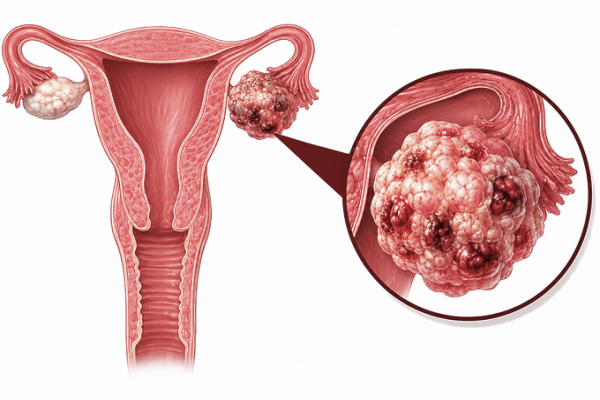
Ovarian cancer is the most lethal gynecologic malignancy, often diagnosed at an advanced stage. Learn about its causes, symptoms, treatment and prognosis at Guangzhou Fosun Chancheng Hospital.
Ovarian cancer originates from ovarian tissue and is the malignancy with the highest mortality among female reproductive system cancers, and the gynecologic cancer with the poorest prognosis. There are about 310,000 new cases and 210,000 deaths worldwide each year; in China, about 55,000 new cases and 38,000 deaths annually. Because the ovaries lie deep in the pelvis and early disease lacks specific symptoms, about 70% of patients are diagnosed at an advanced stage (III-IV) with a 5-year survival of only 30-40%, whereas early (stage I) patients have a 5-year survival above 90%. Epithelial ovarian cancer is the most common histologic type, accounting for about 90% of cases.
Genetic Factors: BRCA1/2 mutations are the most important hereditary factors. Carriers of BRCA1 mutations have a lifetime ovarian cancer risk of about 40-60%, and BRCA2 carriers about 10-20%. Lynch syndrome also increases risk.
Increased Ovulation: The incessant ovulation theory holds that more ovulations mean more epithelial damage and repair, increasing the chance of malignant transformation.
Reproductive Factors: Nulliparity, infertility, early menarche (before 12) and late menopause (after 52) increase risk.
Protective Factors: Multiple pregnancies and deliveries, prolonged breastfeeding, and oral contraceptive use for more than 5 years reduce the risk of ovarian cancer by about 50%.
Age: Risk increases with age, with a peak incidence at 55-65 years.
Endometriosis: Associated with ovarian clear cell carcinoma and endometrioid carcinoma.
Other Factors: Obesity, long-term hormone replacement therapy, and talc exposure.
Abdominal Distension and Pain: Persistent abdominal bloating and pain are the most common symptoms and are often mistaken for digestive problems.
Abdominal Mass: A lower abdominal mass felt by the patient or a pelvic mass found on examination.
Ascites: Advanced ovarian cancer is often accompanied by large amounts of ascites, causing abdominal protrusion and breathing difficulty.
Gastrointestinal Symptoms: Early satiety, loss of appetite, nausea and constipation.
Urinary Symptoms: Frequent urination, urgency and dysuria due to bladder compression.
Menstrual Irregularities: Some patients have menstrual disorders or postmenopausal bleeding.
Systemic Symptoms: Weight loss, fatigue, anemia and low-grade fever due to tumor consumption.
Surgery: Cytoreductive surgery with complete staging is the cornerstone of treatment. Optimal debulking (no residual tumor > 1 cm) significantly improves survival. Fertility-sparing surgery may be considered in young patients with early-stage disease.
Adjuvant Chemotherapy: Platinum-based chemotherapy (carboplatin plus paclitaxel) is standard after surgery, usually for 6 cycles, with intraperitoneal chemotherapy for selected patients.
Neoadjuvant Chemotherapy: Preoperative chemotherapy followed by interval debulking surgery for advanced disease unsuitable for upfront surgery.
Targeted Therapy: Bevacizumab (anti-VEGF) combined with chemotherapy improves progression-free survival; PARP inhibitors (olaparib, niraparib) as maintenance therapy significantly benefit patients with BRCA mutations or homologous recombination deficiency (HRD).
Immunotherapy: PD-1/PD-L1 inhibitors are under evaluation and may benefit selected patients.
Recurrent Disease: Secondary cytoreduction and platinum-based retreatment for platinum-sensitive recurrence; non-platinum regimens and targeted agents for platinum-resistant disease.
Overall Survival: Early-stage (stage I) ovarian cancer has a 5-year survival rate above 90%. Because most patients present at an advanced stage (III-IV), the overall 5-year survival is only 30-40%.
Favorable Factors: Early stage, complete surgical resection (optimal debulking), low-grade histology, and germline or somatic BRCA mutations (which respond well to platinum and PARP inhibitors) are favorable.
Unfavorable Factors: Advanced stage, residual disease after surgery, high-grade serous histology with poor differentiation, and platinum resistance indicate worse outcomes.
Recurrence: The majority of advanced ovarian cancer patients experience recurrence within 2-3 years; platinum-free interval is the most important predictor of response to retreatment.
Advances: PARP inhibitor maintenance therapy has substantially improved progression-free survival in BRCA-mutated and HRD-positive disease.
Genetic Testing: All epithelial ovarian cancer patients should undergo germline BRCA1/2 testing and HRD testing to guide treatment and identify at-risk family members.
High-Risk Surveillance: BRCA mutation carriers and women with Lynch syndrome should undergo regular gynecologic examinations, transvaginal ultrasound and CA125 monitoring, or consider risk-reducing salpingo-oophorectomy after childbearing.
Recognize Early Symptoms: Persistent abdominal bloating, early satiety, pelvic pain and urinary symptoms lasting more than 2 weeks warrant prompt gynecologic evaluation.
Lifestyle: Maintain a healthy weight, exercise regularly, and consider oral contraceptives for appropriate candidates to reduce risk.
Post-Treatment Follow-Up: Regular CA125 monitoring and imaging every 3-6 months for the first 2 years, then every 6-12 months; prompt evaluation of any new symptoms.
Concerned about Ovarian Cancer? Submit your medical records for a professional evaluation.
Upload Documents View Patient CasesPrepare pathology reports, imaging scans, genetic testing reports and prior treatment records for faster review.