
Global Medical Services
International Medical Center
 Diseases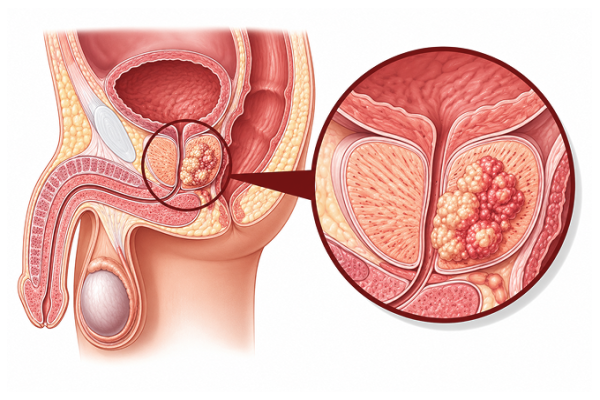
Prostate cancer is the second most common cancer in men worldwide, with incidence rising rapidly in China. Learn about its causes, symptoms, treatment and prognosis at Guangzhou Fosun Chancheng Hospit
Prostate cancer originates from the acinar or ductal epithelium of the prostate and is the second most common malignancy in men worldwide and the fifth leading cause of cancer death, with more than 1.4 million new cases each year. The incidence in China is rising rapidly, and in large cities such as Beijing and Shanghai, prostate cancer has become the most common malignancy of the male genitourinary system. Prostate cancer is strongly age-related: more than 95% of cases occur in men over 45, with a peak incidence at 65-75 years.
Age: Age is the most important risk factor. The disease is rare before age 50, and incidence rises exponentially with age.
Race: African-American men have the highest incidence, followed by Caucasian men, while Asian men have a relatively lower incidence.
Genetic Factors: Having a first-degree relative with prostate cancer increases individual risk 2-3 fold. Mutations in BRCA1/2, HOXB13, ATM and other genes are associated with hereditary prostate cancer.
Hormonal Levels: Androgens play a key role in the development and progression of prostate cancer.
Diet and Lifestyle: High animal-fat diets, excessive red meat intake, obesity and lack of exercise increase risk.
Inflammatory Factors: Chronic prostatitis may be associated with increased risk.
Environmental Exposure: Occupational exposure to cadmium, pesticides and similar agents.
Urinary Symptoms: Frequent urination, urgency, nocturia, difficulty urinating, weak urine stream and urinary retention.
Hematuria: Gross or microscopic blood in the urine.
Hematospermia: Blood in the semen.
Pain: Bone metastasis is the most common site of spread, causing persistent bone pain, pathologic fractures and spinal cord compression.
Systemic Symptoms: Weight loss, fatigue, anemia and loss of appetite in advanced disease.
Leg Swelling: Caused by pelvic lymph node metastasis compressing vessels or lymphatics.
Active Surveillance: For low-risk, low-volume disease in older men, close monitoring with regular PSA and MRI without immediate treatment is an option to avoid overtreatment.
Radical Prostatectomy: Surgery for localized disease, including open, laparoscopic and robotic-assisted approaches, offers excellent cancer control.
Radiotherapy: External beam radiation therapy (IMRT) and brachytherapy are effective alternatives for localized disease with outcomes comparable to surgery.
Androgen Deprivation Therapy (ADT): Medical (GnRH agonists/antagonists) or surgical castration is the cornerstone of treatment for advanced or recurrent disease.
Combined Modality Therapy: ADT plus radiotherapy improves survival in high-risk localized and locally advanced disease.
Hormone-Sensitive Metastatic Disease: ADT combined with docetaxel or androgen receptor pathway inhibitors (abiraterone, enzalutamide, apalutamide, darolutamide) significantly prolongs survival.
Castration-Resistant Prostate Cancer (CRPC): Second-generation antiandrogens, chemotherapy (docetaxel, cabazitaxel), PARP inhibitors for HRR-mutated tumors, and radium-223 or 177Lu-PSMA therapy for bone-predominant disease.
Immunotherapy: PD-1 inhibitors for MSI-H/dMMR tumors.
Overall Survival: Prostate cancer has an excellent prognosis overall, with a 5-year survival rate above 98% for localized disease. Metastatic disease has a median survival of about 3-5 years, which has improved markedly with modern systemic therapy.
Favorable Factors: Low Gleason score, low PSA at diagnosis, early stage, and slow tumor kinetics are favorable.
Unfavorable Factors: High Gleason score (8-10), high PSA, advanced stage, and rapid PSA doubling time indicate a more aggressive course.
Age at Diagnosis: Because many prostate cancers grow slowly, older men often die with the disease rather than from it.
Recurrence: PSA recurrence after treatment is monitored closely; salvage radiotherapy or systemic therapy can be effective for biochemical recurrence.
Screening: PSA testing and digital rectal examination are recommended from age 50 (or 40-45 for high-risk groups such as African ancestry or family history), with individualized frequency based on PSA level.
Healthy Diet: Reduce red meat and high-fat foods, increase intake of vegetables, fruits, tomatoes and soy products; moderate exercise and weight control.
Genetic Counseling: Men with BRCA1/2 mutations or a strong family history should undergo earlier and more intensive screening.
Post-Treatment Follow-Up: Regular PSA monitoring every 3-6 months for the first 2 years, then every 6-12 months; imaging for bone metastasis if bone pain develops.
Managing ADT Side Effects: Monitor bone density, cardiovascular risk, muscle mass and metabolic parameters during androgen deprivation therapy, with appropriate supplementation and exercise.
Report Symptoms Promptly: Seek urologic evaluation for hematuria, new bone pain or urinary symptoms.
Concerned about Prostate Cancer? Submit your medical records for a professional evaluation.
Upload Documents View Patient CasesPrepare pathology reports, imaging scans, genetic testing reports and prior treatment records for faster review.