
Global Medical Services
International Medical Center
 Diseases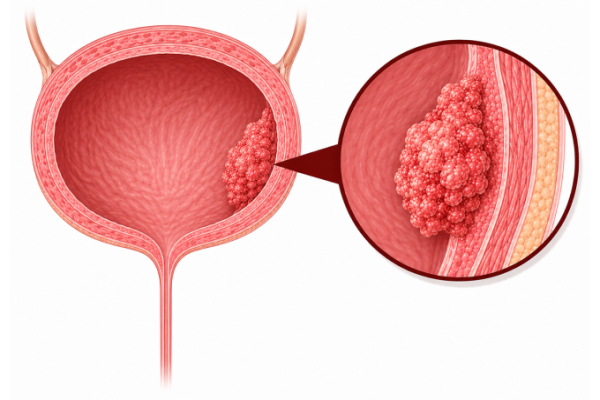
Bladder cancer is one of the most common malignancies of the urinary system, usually presenting with painless hematuria. Learn about its causes, symptoms, treatment and prognosis at Guangzhou Fosun Ch
Bladder cancer originates from the mucosal epithelium of the bladder and is one of the most common malignancies of the urinary system, with about 570,000 new cases each year worldwide. In China it ranks first in incidence among urinary system malignancies. Urothelial carcinoma (transitional cell carcinoma) is the most common histologic type, accounting for over 90% of cases. Bladder cancer is characterized by multicentricity and a high recurrence rate; the 5-year recurrence rate of non-muscle-invasive bladder cancer after surgery reaches 50-70%.
Smoking: Smoking is the most important risk factor, accounting for about 50% of bladder cancer cases; smokers have a 2-4 fold increased risk.
Occupational Exposure: Long-term contact with aromatic amines (in dye, rubber, leather, paint and printing industries), with a latency period of up to 20-30 years.
Chronic Infection: Schistosoma haematobium infection is an important cause in endemic areas (North Africa, the Middle East).
Drugs: Long-term use of cyclophosphamide and phenacetin increases the risk of bladder cancer.
Pelvic Radiation: Prior pelvic radiotherapy increases risk.
Genetic Factors: A positive family history increases risk; Lynch syndrome is associated with upper urinary tract urothelial carcinoma.
Water Factors: High arsenic content in drinking water and exposure to chlorination byproducts.
Painless Gross Hematuria: The most common and earliest symptom; about 85% of patients present with hematuria as the first manifestation.
Irritative Voiding Symptoms: Frequent urination, urgency and painful urination, commonly seen in carcinoma in situ or invasive bladder cancer.
Difficulty Urinating: Caused by tumors at the bladder neck or by blood clots obstructing the urethra.
Upper Urinary Tract Obstruction: Tumor invasion of the ureteral orifice causes flank pain and hydronephrosis.
Advanced Symptoms: Pelvic pain, leg swelling, weight loss and anemia.
Transurethral Resection of Bladder Tumor (TURBT): The primary diagnostic and therapeutic procedure for non-muscle-invasive bladder cancer (NMIBC), followed by risk-adapted adjuvant treatment.
Intravesical Therapy: Bacillus Calmette-Guerin (BCG) instillation is standard for high-risk NMIBC, reducing recurrence and progression; intravesical chemotherapy (mitomycin, gemcitabine) is an alternative.
Radical Cystectomy: Removal of the bladder with lymph node dissection is the standard treatment for muscle-invasive bladder cancer (MIBC), with urinary diversion (ileal conduit, neobladder).
Neoadjuvant Chemotherapy: Cisplatin-based chemotherapy before radical cystectomy improves survival in MIBC.
Bladder-Preserving Therapy: Maximal TURBT plus chemoradiotherapy is an option for selected patients who cannot or do not wish to undergo cystectomy.
Systemic Therapy for Advanced Disease: Platinum-based chemotherapy (GC: gemcitabine plus cisplatin) is first-line; PD-1/PD-L1 inhibitors (pembrolizumab, nivolumab) and enfortumab vedotin for advanced or recurrent disease.
Follow-Up: Regular cystoscopy and urine cytology are essential due to the high recurrence rate.
Overall Survival: Non-muscle-invasive bladder cancer has an excellent 5-year survival rate of 85-95%, but a high recurrence rate of 50-70% within 5 years. Muscle-invasive disease has a 5-year survival of about 40-60% after radical treatment, while metastatic disease carries a median survival of about 12-15 months with modern therapy.
Favorable Factors: Low stage (non-muscle-invasive), low grade, complete TURBT, and response to BCG therapy are favorable.
Unfavorable Factors: Muscle invasion, lymph node metastasis, high grade, carcinoma in situ, and multifocality indicate worse outcomes.
Recurrence and Progression: Close surveillance with cystoscopy is essential because NMIBC can recur and progress to muscle-invasive disease over time.
Advances: Immunotherapy and antibody-drug conjugates have improved outcomes in advanced bladder cancer.
Quit Smoking: Smoking cessation is the single most important preventive measure, reducing both the risk of developing and recurring bladder cancer.
Occupational Protection: Workers in dye, rubber, leather and printing industries should use protective equipment to reduce aromatic amine exposure.
Hydration: Adequate fluid intake dilutes carcinogens in urine and may reduce the risk.
Prompt Evaluation of Hematuria: Any painless hematuria should be evaluated promptly with urine tests, imaging and cystoscopy.
Post-Treatment Surveillance: Regular cystoscopy every 3 months for the first 2 years after TURBT (or per risk stratification), then at increasing intervals; annual urine cytology and upper tract imaging as indicated.
High-Risk Management: Patients with carcinoma in situ or high-risk NMIBC should complete BCG therapy with strict adherence and report any persistent symptoms.
Concerned about Bladder Cancer? Submit your medical records for a professional evaluation.
Upload Documents View Patient CasesPrepare pathology reports, imaging scans, genetic testing reports and prior treatment records for faster review.