
Global Medical Services
International Medical Center
 Diseases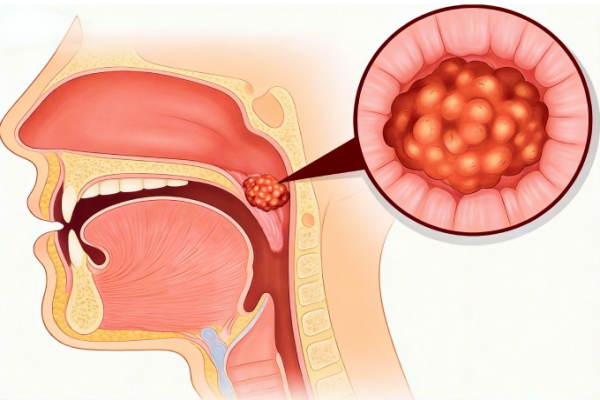
Laryngeal cancer is a malignancy of the larynx (voice box). Learn about its causes, symptoms, diagnosis, treatment options, and prognosis at Guangzhou Fosun Chancheng Hospital.
Laryngeal cancer is predominantly squamous cell carcinoma arising from the mucosal surface of the larynx:
Tobacco Use: Single strongest risk factor. Risk increases with duration and intensity of smoking. Synergistic effect with alcohol (multiplicative, not additive). Risk declines after cessation but never returns to baseline.
Alcohol Consumption: Independent risk factor, especially for supraglottic cancers. Heavy consumption (>3 drinks/day) significantly increases risk.
HPV Infection: HPV-16 associated with a subset of laryngeal cancers, particularly in non-smokers. Better prognosis than tobacco-related cancers.
Occupational Exposures: Asbestos, wood dust, nickel, sulfuric acid mist, mustard gas, textile industry exposures. PAH exposure.
Other Factors: Laryngopharyngeal reflux (GERD), Plummer-Vinson syndrome, prior neck radiation, poor oral hygiene. Male:female ratio 4:1. Peak age 55-75.
Hoarseness: Most common symptom, especially for glottic cancers. Persistent >3 weeks, progressive, not resolving. Any adult with unexplained hoarseness >3 weeks needs laryngoscopy.
Dysphagia/Odynophagia: More common in supraglottic tumors. Sensation of lump in throat, pain with swallowing.
Otalgia: Referred ear pain (via vagus nerve - Arnold nerve). Particularly with supraglottic tumors involving pyriform sinus.
Airway Symptoms: Dyspnea, stridor (inspiratory), hemoptysis. Late-stage presentation.
Neck Mass: Cervical lymphadenopathy. Levels II-IV most commonly involved. May be first presentation in supraglottic cancers.
Other: Chronic cough, throat clearing, globus sensation, halitosis, weight loss (advanced disease).
Early Stage (T1-T2): Single modality - either transoral laser microsurgery or definitive radiotherapy. Equivalent oncologic outcomes. Voice preservation is goal. Cordectomy, partial laryngectomy for selected T1-T2 glottic cancers.
Locally Advanced (T3-T4): Larynx preservation approach: concurrent chemoradiotherapy with cisplatin. Total laryngectomy + neck dissection + adjuvant (chemo)radiation for T4a or non-functional larynx. Induction chemotherapy followed by RT for responders.
Surgical Options: Total laryngectomy: removal of entire larynx with permanent tracheostoma. Voice rehabilitation with tracheoesophageal puncture (TEP), electrolarynx, or esophageal speech. Neck dissection: levels II-IV, ± level VI for subglottic/advanced disease.
Systemic Therapy: Cisplatin-based chemotherapy (concurrent with RT). Pembrolizumab ± chemotherapy for PD-L1 positive recurrent/metastatic disease (KEYNOTE-048). Cetuximab + RT alternative for cisplatin-ineligible.
By Stage: 5-year overall survival: Stage I 90%, Stage II 75-80%, Stage III 55-65%, Stage IVA 45-55%, Stage IVB 30-40%.
By Subsite: Glottic: best prognosis (early detection from hoarseness, sparse lymphatics). Supraglottic: worse prognosis (rich lymphatics, late presentation). Subglottic: rare, moderate prognosis.
Prognostic Factors (favorable): Early T stage, glottic subsite, N0 status, HPV-positive tumors, good performance status, young age, female gender.
Prognostic Factors (unfavorable): T4 disease, N2-N3 nodal disease, positive surgical margins, perineural/lymphovascular invasion, extracapsular extension, subglottic extension >1cm, cartilage invasion.
Recurrence: Most recurrences within 2 years. Local 10-20%, regional 10-20%, distant 5-15% (lung most common). Second primary risk 15-20% over lifetime.
Screening: No routine screening. Prompt laryngoscopy for persistent hoarseness >3 weeks. Biopsy any suspicious lesion.
Smoking Cessation: Essential for treatment efficacy and prevention of second primaries. Continued smoking increases recurrence risk and treatment toxicity. Smoking cessation counseling and pharmacotherapy recommended.
Post-Laryngectomy Care: Tracheostoma care: humidification, suctioning, stoma covers/buttons. Heat and moisture exchangers (HME). Avoid swimming/water exposure to stoma. Speech rehabilitation with SLP.
Swallowing Rehabilitation: Pretreatment and post-treatment SLP evaluation. Swallowing exercises during and after RT. Modified diet textures as needed. Feeding tube for severe dysphagia.
Dental Care: Pre-RT dental evaluation and extractions. Daily fluoride application during and after head/neck RT. Avoid dental extractions in irradiated bone (ORN risk).
Follow-up: Every 1-3 months for year 1, every 2-4 months for year 2, every 4-6 months years 3-5, annually thereafter. Laryngoscopy at each visit. Annual chest imaging. TSH monitoring (RT to neck).
Concerned about Laryngeal Cancer? Submit your medical records for a professional evaluation.
Upload Documents View Patient CasesPrepare pathology reports, imaging scans, genetic testing reports and prior treatment records for faster review.