
Global Medical Services
International Medical Center
 Diseases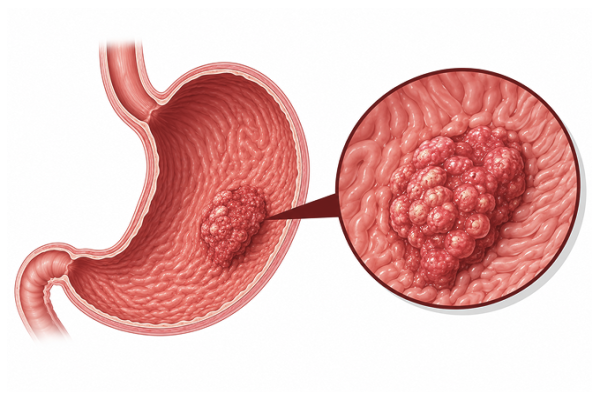
Stomach cancer (gastric cancer) is the fifth most common cancer worldwide, with the highest incidence in East Asia. Learn about its causes, symptoms, treatment and prognosis at Guangzhou Fosun Chanche
Stomach cancer originates from the epithelial cells of the gastric mucosa and is the fifth most common malignancy worldwide, with more than 1 million new cases each year. There are significant regional differences in incidence, with East Asia (especially China, Japan and Korea) having the highest rates. Because early symptoms are often nonspecific, most patients are diagnosed at an advanced stage with a relatively low 5-year survival rate. Endoscopic screening is the key to improving early diagnosis.
Helicobacter pylori Infection: WHO has classified H. pylori as a Group I carcinogen. It is the most important risk factor for stomach cancer, increasing the risk 4-6 fold in infected individuals.
Dietary Factors: High-salt diets, pickled foods (containing nitrites), smoked foods, and low intake of fresh vegetables and fruits.
Smoking and Alcohol: Long-term smoking and heavy drinking significantly increase the risk of stomach cancer.
Genetic Factors: A positive family history increases risk 2-3 fold. Hereditary diffuse gastric cancer is associated with CDH1 gene mutations.
Precancerous Lesions: Chronic atrophic gastritis, intestinal metaplasia, dysplasia, and gastric polyps (adenomatous polyps).
Other Factors: EBV infection, pernicious anemia, and the remnant stomach after partial gastrectomy.
Early Symptoms: Mild upper abdominal discomfort, fullness after meals, loss of appetite, and slight nausea. These symptoms are often overlooked or mistaken for gastritis.
Progressive Symptoms: Persistent upper abdominal pain, significant weight loss, anemia and fatigue as the disease advances.
Black Stools or Vomiting Blood: Resulting from tumor ulceration and bleeding; the amount of blood loss can vary.
Dysphagia: Caused by tumor involvement of the lower esophagus in cardia tumors.
Pyloric Obstruction: Tumors of the pylorus cause vomiting of retained food.
Metastatic Signs: Ascites, jaundice, and enlarged supraclavicular lymph nodes (Virchow node).
Surgery: Curative gastrectomy with lymph node dissection is the primary treatment for localized stomach cancer. Early gastric cancer can be cured by endoscopic resection (EMR/ESD) or limited surgery.
Endoscopic Resection: Early lesions confined to the mucosa can be removed endoscopically with excellent outcomes and preserved quality of life.
Adjuvant and Neoadjuvant Chemotherapy: Perioperative chemotherapy (e.g., FLOT regimen) or postoperative adjuvant chemotherapy improves survival in locally advanced disease.
Radiotherapy: Chemoradiotherapy is used preoperatively or postoperatively, and for palliative control of bleeding or pain.
Targeted Therapy: Trastuzumab combined with chemotherapy is standard for HER2-positive advanced gastric cancer.
Immunotherapy: PD-1 inhibitors (nivolumab, pembrolizumab) are approved for advanced disease and are particularly effective in MSI-H tumors.
Palliative Care: Nutritional support, pain management, and relief of obstruction or bleeding are important in advanced stages.
Overall Survival: Early gastric cancer (stage I) has a 5-year survival rate of over 90%. Locally advanced disease has a 5-year survival of 30-50%, while metastatic disease has a poor prognosis (5-year survival below 10%).
Favorable Factors: Early stage, well-differentiated histology, absence of lymph node metastasis, complete (R0) resection, and HER2-positive status eligible for targeted therapy are favorable.
Unfavorable Factors: Advanced stage, signet ring cell or undifferentiated histology, lymph node metastasis, vascular invasion, and peritoneal seeding indicate worse outcomes.
Recurrence: Most recurrences occur within the first 2-3 years after surgery, so close follow-up with imaging and endoscopy is essential.
Impact of Screening: Population-based endoscopic screening in high-incidence regions has significantly improved early diagnosis and survival.
Screening: Gastroscopy is recommended every 1-2 years for people over 45 or those with high-risk factors, and for first-degree relatives of stomach cancer patients.
H. pylori Eradication: Test and treat H. pylori infection, especially in high-risk populations, to reduce the risk of gastric cancer.
Diet: Reduce salt and pickled or smoked foods, avoid moldy foods, and increase intake of fresh vegetables, fruits and dietary fiber.
Lifestyle: Quit smoking, limit alcohol, and maintain a healthy weight.
Manage Precancerous Lesions: Regular endoscopic follow-up for chronic atrophic gastritis, intestinal metaplasia and gastric polyps.
Post-Treatment Follow-Up: Regular endoscopy, imaging and nutritional monitoring after surgery; vitamin B12 and iron supplementation as needed after total gastrectomy.
Concerned about Stomach Cancer? Submit your medical records for a professional evaluation.
Upload Documents View Patient CasesPrepare pathology reports, imaging scans, genetic testing reports and prior treatment records for faster review.