
Global Medical Services
International Medical Center
 Diseases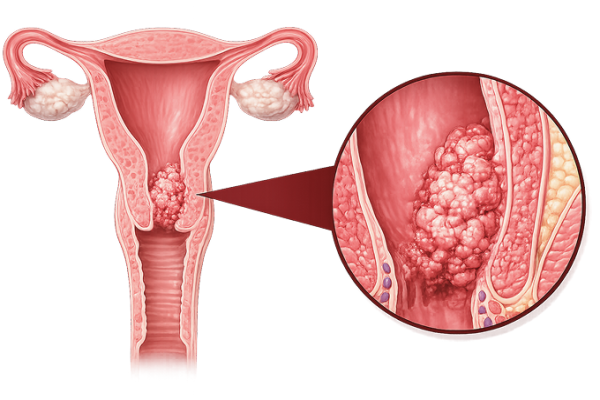
Cervical cancer is the fourth most common cancer in women worldwide and the only major cancer that can be prevented through HPV vaccination and screening. Learn more at Guangzhou Fosun Chancheng Hospi
Cervical cancer originates from the epithelial cells of the uterine cervix and is the fourth most common malignancy in women worldwide. In 2020 there were about 600,000 new cases and 340,000 deaths globally, with about 110,000 new cases each year in China. Cervical cancer is the only major cancer with a clearly defined cause that can be prevented, screened and treated early. Persistent infection with high-risk HPV (human papillomavirus) is the main cause. Through HPV vaccination and regular cervical screening, cervical cancer can potentially be eliminated.
HPV Infection: Persistent infection with high-risk HPV types (especially types 16 and 18) is a necessary condition for cervical cancer; HPV DNA can be detected in more than 99% of cervical cancer tissues.
Sexual Behavior: Early age at first intercourse (under 18), multiple sexual partners, and partners with multiple sexual partners.
High Parity: Multiple deliveries (3 or more) increase the risk of cervical cancer.
Smoking: Smoking increases the risk of cervical cancer 2-3 fold.
Immunosuppression: HIV infection and long-term immunosuppressant use after organ transplantation significantly increase risk.
Long-Term Oral Contraceptives: Use for more than 5 years increases risk.
Other Factors: Low socioeconomic status, nutritional deficiencies and poor personal hygiene.
Postcoital Bleeding: Vaginal bleeding after intercourse or gynecologic examination is the most common early symptom.
Irregular Vaginal Bleeding: Postmenopausal bleeding, prolonged or heavy menstrual periods, and intermenstrual bleeding.
Abnormal Vaginal Discharge: Thin watery, rice-water or purulent bloody discharge, possibly foul-smelling.
Pelvic Pain: Persistent pain in advanced disease when the tumor invades pelvic tissues.
Urinary Symptoms: Frequent urination, urgency, dysuria and hematuria when the tumor invades the bladder.
Rectal Symptoms: Tenesmus, blood in stool and difficult defecation when the tumor invades the rectum.
Leg Swelling: Caused by tumor compression or invasion of pelvic vessels and lymphatics.
Surgery: For early-stage (I-IIA) cervical cancer, radical hysterectomy with pelvic lymph node dissection is the standard treatment. Fertility-sparing procedures (trachelectomy or conization) may be offered in selected early cases.
Radiotherapy: Definitive radiotherapy with concurrent chemotherapy is the standard treatment for locally advanced disease (stage IIB-IVA) and for patients unfit for surgery. It includes external beam radiation and brachytherapy.
Chemotherapy: Platinum-based concurrent chemoradiotherapy improves survival in locally advanced disease; systemic chemotherapy (cisplatin/paclitaxel or with bevacizumab) is used for metastatic disease.
Targeted and Immunotherapy: Bevacizumab combined with chemotherapy for advanced disease; PD-1 inhibitors (pembrolizumab, tislelizumab) for PD-L1-positive or recurrent disease.
Treatment of Precancerous Lesions: LEEP or cold-knife conization treats cervical intraepithelial neoplasia (CIN) and prevents progression to invasive cancer.
Follow-Up: Regular cytology, HPV testing and imaging for recurrence surveillance.
Overall Survival: Early-stage cervical cancer (stage I) has a 5-year survival rate of 85-95%. Locally advanced disease (stage IIB-IVA) has a 5-year survival of 40-65%, while metastatic disease carries a 5-year survival of about 10-20%.
Favorable Factors: Early stage, negative lymph nodes, squamous cell carcinoma histology, and complete response to treatment are favorable.
Unfavorable Factors: Advanced stage, lymph node metastasis, large tumor size, deep stromal invasion and vascular invasion indicate worse outcomes.
Recurrence: Most recurrences occur within 2-3 years of treatment, with the pelvis being the most common site. Regular follow-up with cytology and imaging is essential.
Prevention Impact: Screening and HPV vaccination dramatically reduce the incidence of invasive cervical cancer and its mortality.
HPV Vaccination: HPV vaccination is recommended for girls and women aged 9-45, ideally before the first sexual experience, to prevent high-risk HPV infection.
Screening: Women aged 25 and above should undergo cervical cytology (TCT/LCT) every 3 years or HPV testing every 5 years; combined screening increases detection rates.
Healthy Lifestyle: Quit smoking, maintain good personal hygiene, and practice safe sex to reduce HPV exposure.
Early Management: Timely diagnosis and treatment of precancerous lesions (CIN) and regular follow-up for persistent HPV infection.
Post-Treatment Follow-Up: Regular cytology, HPV testing and imaging every 3-6 months for the first 2 years after treatment, then every 6-12 months.
Report Symptoms Promptly: Seek medical attention immediately for postcoital bleeding, irregular bleeding or abnormal discharge.
Concerned about Cervical Cancer? Submit your medical records for a professional evaluation.
Upload Documents View Patient CasesPrepare pathology reports, imaging scans, genetic testing reports and prior treatment records for faster review.